What a Metabolism-Boosting Meal Plan Actually Looks Like
By Leslie | Registered Dietitian and Founder, Wellbeing Nutrition Coaching | 8 min read
Somewhere along the way the phrase metabolism-boosting got hijacked by supplement companies, detox teas, and cayenne pepper shots. And because of that, a lot of women have stopped taking it seriously, even though the actual science behind supporting your metabolism is straightforward, accessible, and genuinely life-changing when you apply it.
A real metabolism-boosting meal plan is not a 7-day cleanse or a list of superfoods you need to order online. It is a way of eating that gives your body what it needs to function well, burn efficiently, and feel good day to day. And it starts not with cutting, but with adding.
Your metabolism is not broken. It has adapted to what you have been giving it. Give it something different and watch what changes.
What Metabolism-Boosting Actually Means
Your metabolism is simply the process of converting food into energy. The rate at which you do that is influenced by how much muscle you have, how consistently you eat, how well you sleep, and how much stress your body is under.
None of those things are fixed. All of them respond to how you eat and live. So when we talk about a metabolism-boosting approach, we are really talking about a way of eating that supports muscle, keeps your blood sugar steady, reduces the stress load on your body, and gives you consistent energy. That is it. No tricks, no shortcuts, no supplements required.
The Foundation of a Metabolism-Boosting Meal Plan
Protein at every meal
Protein has what is called a thermic effect, meaning your body burns more calories digesting it than it does digesting carbohydrates or fat. A high-protein diet also preserves muscle mass during weight loss, and muscle is your body’s most metabolically active tissue. More muscle means more calories burned at rest, every single day.
Research consistently shows that women who eat higher amounts of protein lose more fat, retain more muscle, and maintain their results better long-term. Aim for 25 to 30 grams at each meal. This is the single highest-return change most women can make.
Fiber-rich foods at most meals
Fiber slows digestion, steadies blood sugar, and keeps you full between meals. When your blood sugar is steady, your energy is steady, your mood is steady, and your body is not pumping out stress hormones to compensate for the crash. The metabolic carbs at the heart of the Metabolic Plate Method™, things like lentils, chickpeas, black beans, and edamame, combine protein and fiber in one food and are some of the most powerful metabolism-supporting foods available.
Consistent meals starting with breakfast
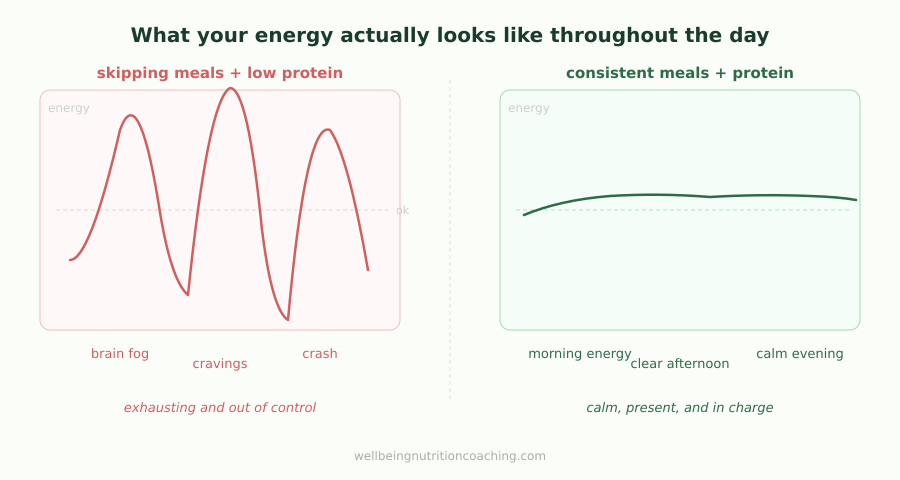
Research suggests that skipping breakfast and irregular eating patterns can contribute to metabolic disturbances and increased hunger later in the day. Eating consistently, particularly starting the day with a protein-rich breakfast, supports steady metabolic function throughout the day and reduces the blood sugar swings that drive cravings and overeating.
Enough food to actually fuel your body
This is the part most metabolism-boosting plans miss entirely. Your metabolism slows when you eat too little because your body adapts to conserve energy. Eating enough, and specifically enough protein, is what keeps your metabolic rate running well. A meal plan that leaves you hungry is not boosting your metabolism. It is suppressing it.
What a Day Looks Like on a Metabolism-Boosting Approach
Breakfast
Two eggs scrambled with vegetables or Greek yogurt with seeds and berries. This sets your blood sugar, your energy, and your hunger hormones for the rest of the day.
Lunch
A bowl with a whole grain base, a generous portion of lentils or chickpeas, roasted vegetables, and a tahini dressing with grilled chicken if you want to go fancy. Something satisfying enough that the 3pm wall does not exist.
Afternoon snack if needed
A boiled egg and a piece of fruit. Greek yogurt with nuts. Edamame with a sprinkle of salt. Something with protein and fiber is that killer combo we want. Eating something real here means you arrive at dinner as a person making a choice, not a person who is desperate.
Dinner
Protein, plenty of vegetables, a satisfying carbohydrate if you want one. Eating a real dinner that leaves you genuinely satisfied means the rest of the evening is calm. No standing at the fridge at 9pm wondering why you cannot stop eating.
What a Metabolism-Boosting Approach Does for Your Daily Life
I want to be honest about what this actually produces, because it goes so far beyond the numbers.
When you eat in a way that supports your metabolism consistently, you wake up with energy rather than dragging yourself out of bed. You get through your workday without the fog that sets in after a skipped breakfast. You have patience at dinner instead of running on fumes. You sit down with your family and you are actually present, not calculating.
That is the real payoff of a metabolism-boosting meal plan. Not just fat loss. A completely different experience of your own daily life.
Energy, presence, patience, confidence. These are the things that change first. The weight follows.
Frequently Asked Questions
What foods are best for boosting metabolism?
The foods with the most consistent research support are protein-rich foods like eggs, lean meat, fish, Greek yogurt, legumes, and tofu. Fiber-rich foods like lentils, chickpeas, vegetables, and whole grains. And adequate hydration. Coffee and green tea have a modest, temporary effect on metabolic rate but should not be relied on as a strategy.
How quickly will I see a difference?
Most women notice changes in energy and hunger within the first week of eating more protein consistently. Physical changes in body composition typically appear within four to eight weeks. Metabolic changes, meaning how efficiently your body burns energy at rest, take longer and respond to sustained consistency over months.
Does skipping meals slow my metabolism?
Research suggests that irregular eating patterns and skipping meals, particularly breakfast, can contribute to blood sugar instability, increased hunger, and less consistent energy throughout the day. Over time, chronic undereating can lower resting metabolic rate measurably. Eating consistently supports your metabolism better than meal skipping.
Want to Feel This Difference in Just 5 Days?
The 5-Day Confident Body Challenge gives you exactly this: five days of focused lessons, one simple daily action, a printable habit tracker, and 15 metabolism-supporting recipes that are high-protein, satisfying, and genuinely easy to make. It is the most straightforward way to start feeling what this approach actually does.
Five days. $17. Start today.
Join the challenge at wellbeingnutritioncoaching.com/confident-body-challenge
You do not need a complicated plan. You need a consistent one. And five days is enough to start feeling the difference.
Sources
1. Rupa Health. Metabolism-Boosting Foods: What to Eat for Optimal Energy Levels, 2025.
2. University of Illinois. Weight-loss success depends on eating more protein, fiber while limiting calories. ScienceDaily, August 2024.
3. Leidy, H.J. et al. The role of protein in weight loss and maintenance. American Journal of Clinical Nutrition, 2015.
4. Pennington Biomedical Research Center via Nutrisense Journal. Undereating and Weight Gain: Why a Calorie Deficit Can Fail, 2025.
CATEGORY
5/22/2026

Comments Off on